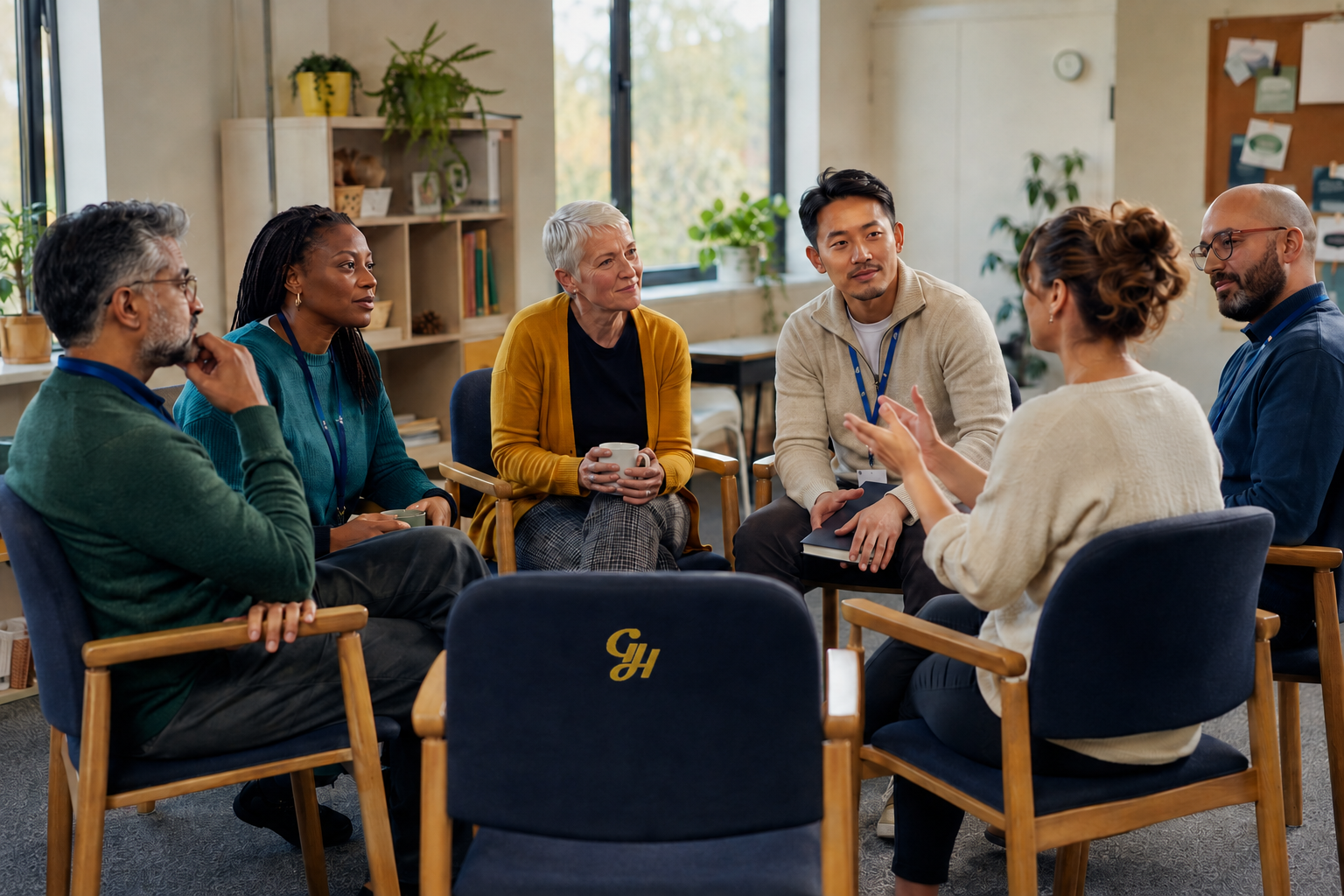
A Community of Practice can help keep Motivational Interviewing alive after formal training by giving practitioners regular opportunities to learn with and from one another.
Why create an MI Community of Practice?
Without opportunities to revisit skills, discuss practice and receive feedback, learning can fade into the pressures of everyday work. A Community of Practice creates a recurring space in which MI remains visible.
What might happen in a session?
Practise reflections, affirmations or information exchange
Explore anonymised practice dilemmas
Listen to and discuss MI demonstrations
Notice change talk, sustain talk and discord
Review recordings where governance permits
Use short deliberate-practice exercises
Discuss new developments in MI
Keep it developmental rather than performative
People are more likely to bring genuine learning needs when the group is not experienced as a test of competence. The emphasis should be curiosity, experimentation and useful feedback.
Who facilitates?
An experienced MI practitioner or local champion may facilitate, but the role needs clarity. Being enthusiastic about MI is not the same as being qualified to provide formal fidelity coding or advanced training.
From individual learning to organisational culture
Communities of Practice can connect individual skill development with wider implementation. They give organisations a practical mechanism for sustaining attention to conversational practice between formal training events.