
Ep 5 Carl Rogers (Person Centred Helping)

Ep 5 Carl Rogers (Person Centred Helping)
 Glenn Hinds
 Carl Rogers and Motivational Interviewing
How did Carl Rogers and person-centred helping influence Motivational Interviewing? In Episode 5 of Talking to Change, Glenn Hinds and Sebastian Kaplan talk with Dr Christopher C. Wagner about Carl Rogers and Motivational Interviewing, and the person-centred foundations that continue to shape MI practice.
The discussion considers Rogers’ radical departure from an expert model of helping. Rather than positioning the practitioner as the person who diagnoses the problem and supplies the answer, person-centred practice emphasises understanding the client’s experience and creating conditions that support growth and change. These ideas can be seen in the Spirit of Motivational Interviewing, particularly acceptance and partnership.
Chris explores Rogers’ core conditions, incongruence, acceptance, growth and emotional emancipation. The conversation also considers where Motivational Interviewing builds on its person-centred foundations by intentionally attending to language, direction and conversations about change.
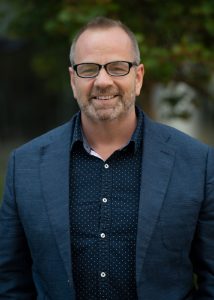 Chris is an associate professor, licensed clinical psychologist and certified rehabilitation counsellor. His scholarship focuses on Motivational Interviewing and interpersonal processes in mental health and substance use treatment. He has helped expand MI theory and practice, including the development of MI group psychotherapy, and is lead author of the Guilford Press book on Motivational Interviewing in groups.
In this episode
- 0:00 – Opening and introduction
- 8:00 – Rogers’ radical departure from the expert model of helping
- 14:00 – The spirit of person-centred interactions
- 19:00 – Rogers’ six core conditions
- 28:00 – “Inside the bubble”: incongruence and acceptance
- 36:00 – Rogers’ core conditions: necessary and sufficient, but efficient?
- 41:00 – A growth perspective
- 49:00 – Emotional emancipation
- 56:00 – Positive discrepancy
- 1:00:00 – MI in groups, proactive orientation and beyond discrete behaviour change
- 1:10:00 – MI in dentistry, updating the MI groups model and organic MI training
Contact information
Email: ccwagner@vcu.edu
Listen to Episode 5
For questions or suggestions about Talking to Change, contact Glenn Hinds and Sebastian Kaplan.
Contact and follow the podcast
Email: podcast@glennhinds.com
glenn@glennhinds.com
sebkaplan34@gmail.com
BlueSky:
@glennhinds.bsky.social
@sgkfromnc.bsky.social
@talkingtochange.bsky.social
Podcast: Play in new window | Download
Subscribe: RSS

